
Are Google Ads Worth It for a Small Business?
Google Ads are worth it when people search for what you sell and your math works — in 2026 the average search click costs about $5.42 and the average lead $67. Here's how to know if Google Ads pay off for your small business, and which campaign type to start with.

Evolvv Strategies
Operator notes
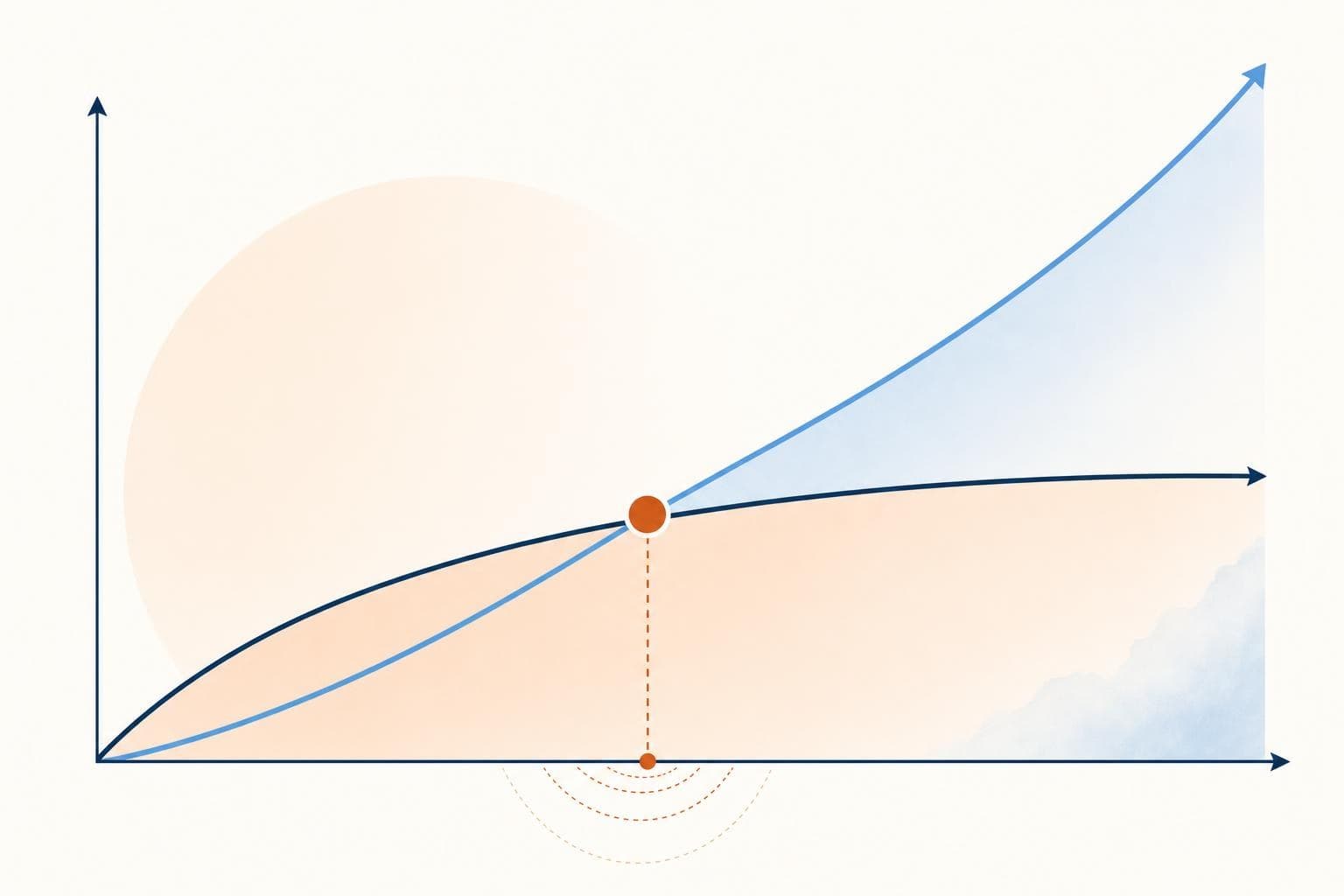
Google Ads are worth it for a small business when you sell something people actively search for, a customer is worth meaningfully more than it costs to acquire one, and your website converts the traffic. The 2026 benchmarks make the stakes concrete: the average small-business search ad costs about $5.42 per click and $67 per lead. If your math clears that bar, Google Ads can be highly profitable. If not, they'll quietly drain your budget.
Every owner has heard both stories: "Google Ads made my business" and "I lost two grand and got nothing." Both are true. The difference isn't luck. It's whether the math worked before they ever pressed go.
What makes Google Ads different from other ads?
Google Ads catch people at the exact moment they're looking for what you sell. Someone typing "emergency plumber near me" has their wallet half out. That intent is what makes search ads so powerful — you're not interrupting people, you're answering them.
That's also why they only work for certain businesses. If people don't search for your thing, there's no intent to catch. A new product nobody knows to look for is a poor fit for search ads — that's a job for social or content, where you create demand instead of capturing it.
Google Ads don't create demand. They catch demand that already exists.
Which type of Google Ads fits a small business?
Google Ads is now several products, and picking the right one matters as much as the budget:
- Search campaigns — the classic text ads on results pages. You choose the keywords, the copy, and the bids. The most control, and the best fit when specific high-intent searches describe what you sell.
- Local Services Ads (LSAs) — for 100-plus local service categories (plumbers, electricians, HVAC, roofers, lawyers, accountants and more). You pay per lead — a call or message — not per click, and listings carry Google's "Google Verified" badge (which replaced the old Google Screened and Google Guaranteed badges in late 2025). One 2026 home-services benchmark put the blended average around $53 per lead. Low management burden, sits above the regular ads.
- Performance Max — one AI-driven campaign that serves across Search, YouTube, Maps, Gmail, and Display. Simple to run but hands Google the steering wheel, and it only optimizes well if your conversion tracking is solid. Not the place to start.
- Demand Gen — visual ads that reach people before they search. That's awareness spending, not lead capture; skip it until your demand-capture campaigns are maxed out.
If you're an eligible local service business, LSAs plus a tight Search campaign is the standard 2026 starting stack.
Do the numbers work? Run the math before you run the ad
Most Google Ads failures aren't bad ads — they're bad math nobody checked first. Before spending a dollar, you need two numbers: what a customer is worth to you, and what it costs to get one.
Use the current benchmarks as a sanity check. Across more than 13,000 US search campaigns, the 2026 WordStream/LocaliQ study found an average cost per click of $5.42 and an average cost per lead of $66.69 — ranging from under $2 a click in some industries to nearly $10 for attorneys and around $8 for home improvement and dentists. (The good news: average cost per lead fell this year for the first time in five years.) If a customer is worth $2,000 to you, paying $100 to win one is a great trade. If a customer is worth $80, the average lead cost alone sinks you. Know your ceiling — I walk through the full calculation in how much you should spend to acquire a customer.
When I ran my last company, the campaigns that worked all shared one thing: we knew our cost-per-customer and our customer value cold, and only scaled the ones where the gap was clearly positive. The ones we ran on vibes are the ones that burned cash.
How do I test Google Ads without gambling?
- Know your numbers first. Calculate what a customer is worth and the most you can pay to acquire one and stay profitable.
- Target high-intent searches only. Bid on terms that signal someone's ready to buy, not vague browsing keywords.
- Send clicks to a focused landing page. Match the page to the search, with one clear action. Don't dump paid traffic on your homepage.
- Set a small test budget and a deadline. At 2026 lead costs, a few hundred to a thousand dollars over a few weeks buys real data — with a hard stop to review.
- Track to actual customers, not clicks. Measure cost per real lead and per closed sale, then scale only what profits.
Why do ads expose the rest of your business?
Google Ads often fail not because the ads are bad, but because the website is. You can buy perfect clicks, but if the page is slow, confusing, or has a weak call to action, that traffic bounces and your money's gone.
Paid traffic is unforgiving — it spotlights every weakness in your funnel. Fix your conversion path before scaling spend. This is exactly the kind of thing our services tighten up first.
Ads don't fix a broken funnel. They just help you lose money faster.
Here's what I'd actually do
If you're a local service business in an LSA-eligible category, set up Local Services Ads first: pay-per-lead pricing caps your downside, and there's little to manage. Then add one tightly-themed Search campaign on your highest-intent terms, pointed at one focused landing page. Skip Performance Max until your conversion tracking has a month of clean data. And before committing to paid at all, weigh it against the slower, compounding route — I compare the two in SEO vs. paid ads: which should come first?.
FAQ
How much should a small business spend on Google Ads to start?
Enough to gather real data — at 2026 averages of roughly $5.42 per click and $67 per lead, that usually means a few hundred to a thousand dollars over a few weeks, with a hard stop to review. The goal of the first budget is to learn your numbers, not to win big.
What's the difference between Local Services Ads and regular Google Ads?
Local Services Ads charge per lead (a call or message) instead of per click, show above regular ads, and carry Google's Verified badge after a background check. They're available for 100-plus local service categories and need almost no ongoing management. Standard Search campaigns give more control over keywords and landing pages. Many local businesses run both.
How do I know if Google Ads are profitable for me?
Compare what it costs to acquire a customer against what that customer is worth over time. If customer value comfortably exceeds your cost per closed sale, ads are profitable and worth scaling. Track all the way to closed sales, not just clicks, or you'll mistake activity for results.
Why are my Google Ads not converting?
Usually the problem is after the click — a slow page, an unclear offer, or a weak call to action. Paid traffic exposes every funnel weakness. Before blaming the ads, make sure clicks land on a focused page that matches the search and asks for one clear action.
Are Google Ads better than social media ads?
They're different tools. Google Ads capture existing demand from people already searching, which suits services and known products. Social ads create demand and build awareness, which suits new or visual products. If you're weighing the two, start with whether Facebook and Instagram ads make sense for you.
Not sure if your site can turn paid clicks into customers? A free Growth Audit checks your funnel first, so you don't pay Google to send traffic to a leaky page.